Cancún Trip Planner
Plan your perfect trip

Things to do 4 ways to do it

Mexican & Yucatecan Cooking Classes

Cancún's cooking classes put you in home kitchens and beachfront setups with local cooks who've been grinding recado and pressing tortillas since childhood. These aren't demo theaters — you're nixtamalizing corn, charring chiles in a molcajete, and learning why pibil needs banana leaves, not foil. The classes range from hour-long tortilla intensives to full-day loops that fold cooking into cenote swims and ruin visits.

Updated September 2026

Pick your way

The ways to do it — honestly compared.

Way 1

Deep-dive Yucatecan fundamentals

These classes start with raw ingredients — grinding corn into nixtamal, blending achiote into recado rojo, building pibil from scratch. You're learning techniques that anchor the entire regional cuisine, often in multi-hour sessions outside Tulum or Cozumel. The pace is slow, the instruction is granular, and you leave understanding why Yucatecan food tastes the way it does.

Why you'll love it

  • Ground-up technique training (nixtamal, recado, molcajete work)
  • Focuses on regional dishes you won't find in border-state cooking classes
  • Small groups or private instruction
  • Often includes market stops or cultural context

Worth knowing

  • Four-hour commitment minimum
  • Less variety — you're mastering a few dishes, not sampling ten
  • Usually requires travel outside hotel zones

Best for: Home cooks who want to replicate Yucatecan food correctly when they're back in their own kitchens

Typical price: $91–134 per person
Way 2

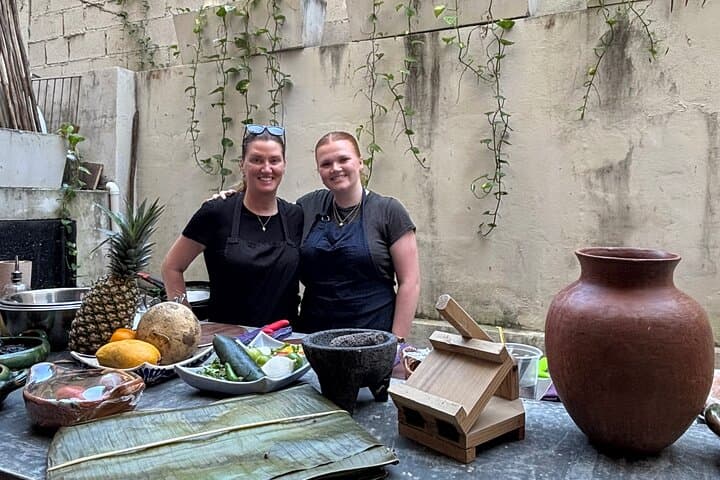
Coastal seafood on the beach

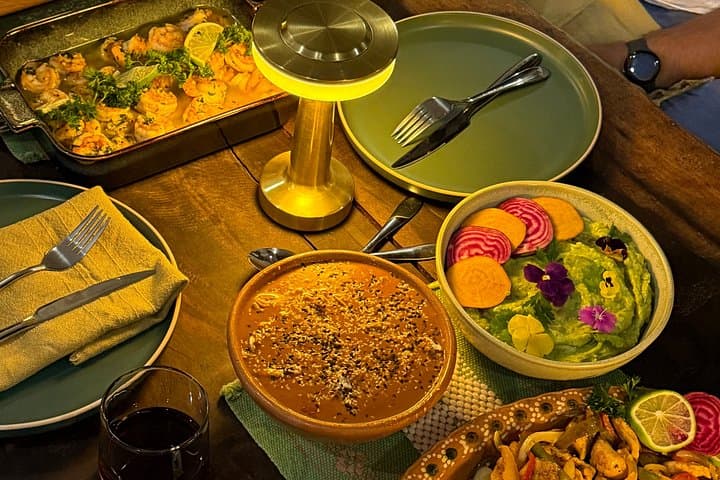
These classes happen right on the sand with a local chef grilling fresh catch and walking you through ceviches, fish tacos, and coastal salsas. The setting is informal — you're cooking where people actually cook this food — and the ingredient list changes based on what came in that morning. It's a shorter format, usually three to four hours, focused on technique over cultural deep-dive.

Why you'll love it

  • Beachfront setting with ocean breeze
  • Fresh seafood pulled from local markets that morning
  • Grilling and ceviche techniques translate to any coastal cuisine
  • Shorter time commitment than ruin-and-cenote combos

Worth knowing

  • Weather-dependent (wind, rain, heat)
  • Less focus on Yucatecan-specific dishes
  • May be harder to replicate without access to ultra-fresh fish

Best for: Seafood lovers who want hands-on grilling skills and don't need the full Mayan cultural context

Typical price: $114–118 per person

Way 3

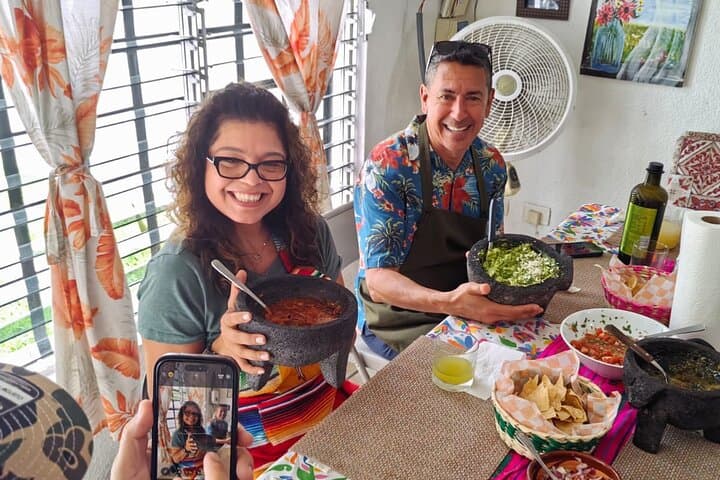
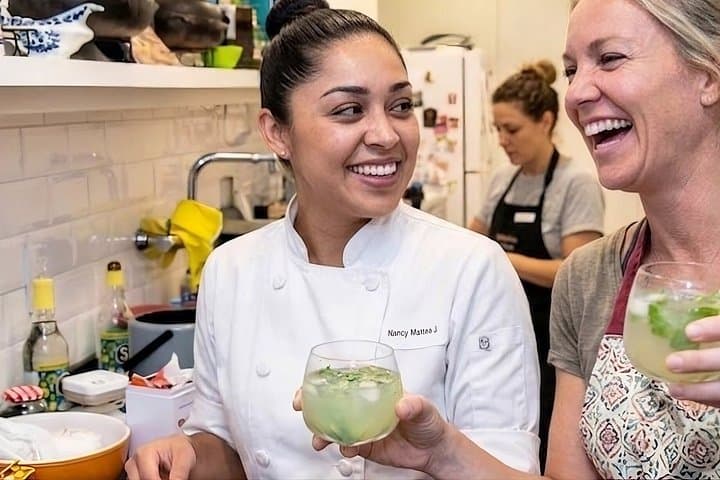
Private class in a home kitchen

A local chef — often someone like Alberto, who's been teaching for years — hosts you in their actual kitchen for a three-hour private session. You pick the menu ahead of time (tacos, mole, ceviche, whatever you want to learn), then work through it step-by-step with full attention and zero crowd. The instruction is tailored to your skill level, and you're not waiting for eight other people to catch up.

Why you'll love it

  • Fully customizable menu
  • One-on-one or small private group instruction
  • Taught in a real home, not a commercial kitchen
  • High control over pacing and detail level

Worth knowing

  • Higher per-person cost for solo travelers
  • Less spontaneous — you commit to a menu in advance
  • May lack the social energy of group classes

Best for: Couples or small groups who want a personalized curriculum and don't mind paying for privacy

Typical price: $172–300 per booking

Way 4

Cooking folded into a bigger day tour

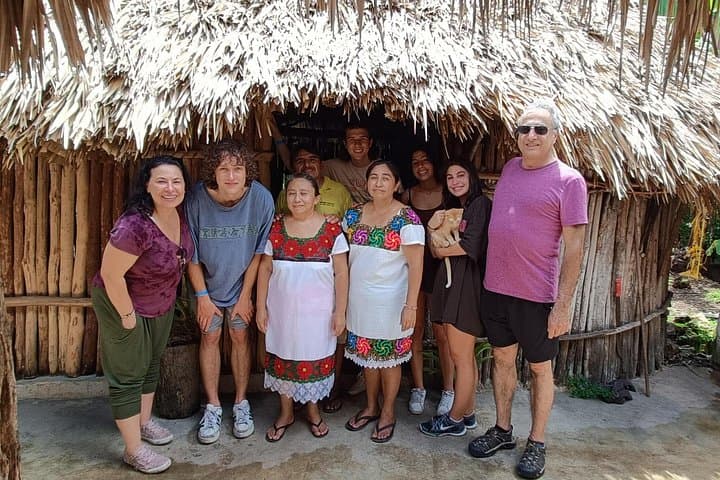
These are eight- to nine-hour private tours that pair a cooking class with cenote swims, ruin visits, or cultural loops through multiple artisan stations. The cooking portion is shorter — usually an hour or two — and the focus shifts to variety over depth. You're tasting honey, pressing tortillas, climbing pyramids, and cooling off in a sinkhole, all in one long day.

Why you'll love it

  • Combines cooking with swim stops and cultural sites
  • Private format means flexible pacing
  • Good value if you want multiple experiences in one outing
  • Kids and non-cooks stay engaged with the variety

Worth knowing

  • Long days (8–9 hours) with early starts
  • Less hands-on cooking time than dedicated classes
  • Can feel rushed if you want to linger on technique

Best for: Travelers who want a sampler platter of regional culture without committing a full day to just cooking

Typical price: $249–289 per person

Before you go

  • Book private classes at least a week out — home kitchens and beachfront setups can't flex capacity like hotel demo kitchens.
  • If you're serious about technique, skip the combo tours and pick a class that spends three-plus hours on food alone.
  • Most classes include lunch or dinner as the payoff, so schedule them around a meal you'd otherwise skip.
  • Bring cash for market stops — vendors at local mercados don't take cards, and your instructor will expect you to pay for your own ingredients in some formats.
  • Classes outside hotel zones (Tulum, Cozumel) often require 30–60 minutes of travel each way; factor that into your day.
  • If you want to learn a specific dish (cochinita pibil, mole negro), confirm the menu ahead of time — many classes rotate based on season and instructor preference.